


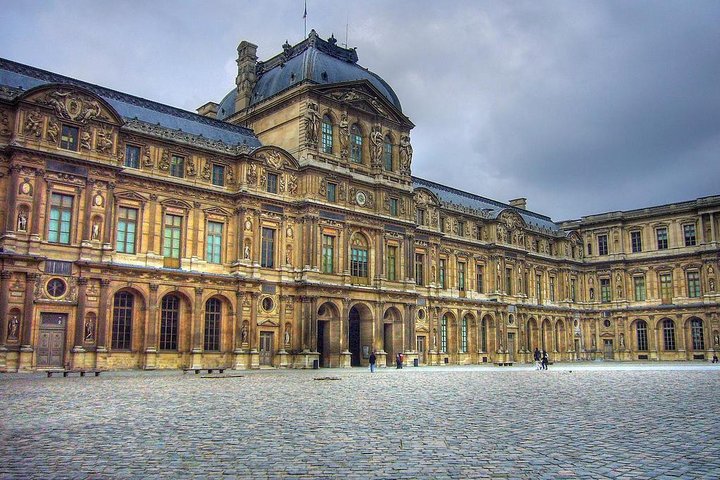


The Louvre on Your Terms
The Louvre is the largest art museum in the world — 72,735 square metres of gallery space, over 380,000 objects in the collection, and roughly 35,000 works on display at any given time. It is, by any measure, overwhelming. A private tour is how you make it manageable, personal, and genuinely rewarding rather than an exercise in crowd navigation and sensory overload.
A private Louvre tour dedicates a guide exclusively to your group. You control the pace, the focus, and the route. Interested in Italian Renaissance painting? Your guide builds the visit around the Grande Galerie and the works that led to and followed from Leonardo. Fascinated by ancient civilisations? The Egyptian, Greek, and Mesopotamian departments become the core of your tour. Travelling with children? The route shifts to the works that engage young imaginations — mummies, the Winged Victory, the Crown Jewels, the Mona Lisa — at a pace that respects their attention spans. This adaptability is what makes a private tour worth the premium. Every minute is spent on things your group cares about.
What a Private Tour Offers That Group Tours Don’t
The practical advantages are immediate. No waiting for 20 strangers to regroup at every gallery transition. No guide delivering a lowest-common-denominator narrative designed to satisfy every possible interest simultaneously. No fixed route that lingers in departments that bore you while rushing through the ones you came for.
But the real value runs deeper than logistics. A private guide responds to your reactions in real time. If you’re captivated by Caravaggio’s chiaroscuro technique, the guide can spend 15 minutes exploring how that single innovation changed the course of European painting — pointing out its influence in works down the same corridor. If a particular sculpture stops you in your tracks, the guide can build an impromptu lesson around it rather than moving on because the schedule demands it. This responsiveness transforms a museum visit from a parade of famous objects into a genuine educational experience tailored to your curiosity.
How Private Louvre Tours Work
Most private tours run 2–3 hours, which is the optimal window for sustained engagement in a museum this dense. Shorter tours (90 minutes) exist for visitors with limited time or young children. Extended tours (4+ hours, sometimes with a break) suit serious art enthusiasts who want comprehensive coverage.
Your guide will typically contact you before the tour to discuss your interests, any must-see works, and how much art history background your group has. This pre-tour conversation is one of the core advantages of the private format — the guide arrives with a plan shaped around your group rather than a generic script. A good guide will also ask about physical limitations, since the Louvre’s galleries involve significant walking and some areas require stairs.
Entry logistics are handled by the guide — timed-entry tickets, the fastest entrance route (Passage Richelieu or the Carrousel du Louvre rather than the main pyramid queue), and navigation through the museum’s sometimes-confusing layout. You meet the guide near the museum, skip the worst of the queues, and begin immediately rather than spending your first 30 minutes figuring out where you are.
Who Private Tours Suit Best
Families with children benefit enormously from the pace control. A private guide can read a child’s engagement level and adjust — spending more time where they’re fascinated, moving on when attention wanders, and framing the art in terms that resonate with younger visitors. A private family tour is a fundamentally different experience from dragging children through a group tour designed for adults.
Couples and small groups get an intimate experience that feels more like exploring with a knowledgeable friend than following a tour guide. The conversation is natural, the pace is yours, and the guide can go as deep as your interest warrants on any given work.
Art enthusiasts and repeat visitors can request specialist routes that skip the famous works entirely — a tour focused on Northern European painting, or the Louvre’s extraordinary decorative arts collection, or the Napoleonic apartments, or the medieval foundations beneath the museum. These specialist itineraries are only possible in a private format.
Visitors with accessibility needs can have routes planned around elevator access, rest points, and gallery sequences that minimise backtracking. The Louvre is a physically demanding museum, and a guide who plans around your specific mobility level makes the difference between an enjoyable visit and an exhausting one.
Practical Tips
Communicate your interests before the tour. The more your guide knows about what engages your group, the better the experience. Even a brief email mentioning favourite artists, periods, or subjects lets the guide prepare a route that resonates.
Don’t try to see everything. Even on an extended private tour, you’ll cover a fraction of the Louvre. This is by design — depth beats breadth in a museum this large. Trust your guide to curate the strongest possible experience within your time frame.
Wear comfortable shoes and bring water. A 2–3 hour private tour covers 3–5 kilometres of gallery walking on hard floors. Good footwear and hydration make the difference between finishing energised and finishing depleted.
Book further ahead in peak season. The best private guides are in high demand during summer (June–September) and school holidays. Booking 2–4 weeks ahead ensures availability. Off-season bookings are easier to arrange on shorter notice.
Frequently Asked Questions
How many people can join a private tour?
Most operators accommodate groups of 1–8 people on a single private tour. Larger groups may require a second guide due to the Louvre’s regulations on guided group sizes within the galleries. The experience is most intimate and flexible with groups of 2–6.
Can a private guide take us to specific works we want to see?
Yes — this is one of the primary advantages of the format. If there are specific works on your must-see list, share them with the guide in advance and they’ll build the route to include them. Guides can also recommend works you may not know about based on your stated interests.
Is a private tour worth the cost over a small group tour?
It depends on what you value. Per person, a private tour costs more than a small group tour. But the experience is substantially more personalised — your pace, your interests, your questions answered in depth. For families, couples, and anyone with specific interests or accessibility needs, the premium is justified by the quality of the experience. For solo travellers or visitors who enjoy the social dynamic of a group, a small group tour delivers excellent value.
What’s the best duration for a private Louvre tour?
Two to three hours is the sweet spot for most visitors — long enough to cover the major highlights with depth, short enough to maintain focus and energy. Art enthusiasts who want comprehensive coverage should consider 3–4 hours with a break. Families with young children are often best served by 90 minutes to 2 hours, focused on the works that most engage children.