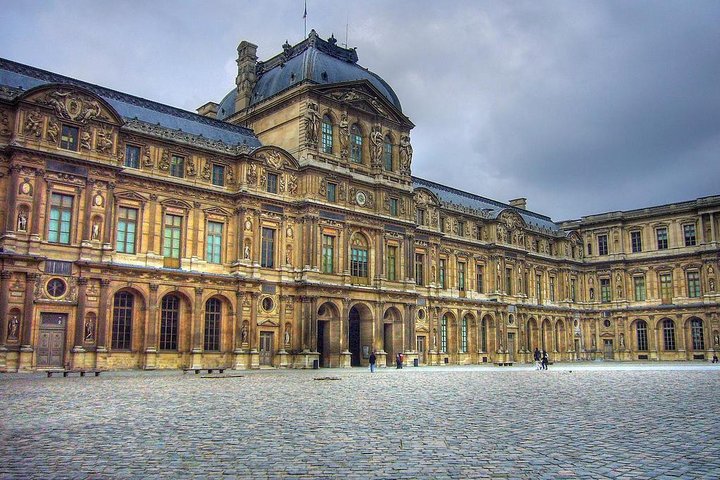


The Louvre Beyond the Greatest Hits
A themed Louvre tour abandons the conventional approach of hitting the famous works in sequence and instead dives deep into a specific department, period, civilisation, or artistic subject. This is the format for visitors who’ve already done the highlights or who arrive with a specific passion — ancient Egypt, French painting, sculpture, decorative arts, or any of the other specialisms that make the Louvre the encyclopaedic institution it is.
The Louvre’s scale makes themed tours not just possible but necessary for anyone who wants to go beyond the surface. The Egyptian department alone contains over 50,000 objects. The painting collection spans from the 13th century to the mid-19th century across every major European school. The sculpture collection runs from ancient Mesopotamia to Canova and Houdon. No highlights tour can do justice to any single one of these areas — but a themed tour built around your interest can spend 2–3 focused hours exploring the depth that lies behind each department’s headline works.
Common Themed Tour Subjects
Ancient Egypt is one of the Louvre’s strongest departments and one of the most popular themed tour subjects. The collection spans 5,000 years — from predynastic flint tools to Roman-era mummy portraits — and fills an entire wing of the museum. A themed Egyptian tour takes you through sarcophagi, canopic jars, the Book of the Dead papyri, monumental sculpture, everyday objects, and the funerary beliefs that drove one of history’s most extraordinary artistic traditions. The seated Scribe and the Great Sphinx of Tanis are the department’s most famous works, but the depth of the surrounding collection rewards the extended exploration that a themed tour provides.
Italian Renaissance painting centres on the Grande Galerie and the rooms surrounding the Mona Lisa. A themed tour focused on this collection might trace the development from early Renaissance (Cimabue, Giotto) through the High Renaissance (Leonardo, Raphael, Titian) to the Baroque (Caravaggio), examining how Italian artists revolutionised composition, perspective, colour, and the depiction of human emotion across three centuries. The Louvre’s Italian painting collection is arguably the finest outside Italy, and a themed tour reveals its full depth rather than cherry-picking the three or four most famous works.
French painting is the Louvre’s national collection and tells the story of French art from medieval altarpieces to the Romantic movement. The blockbusters — David’s “Coronation of Napoleon,” Delacroix’s “Liberty Leading the People,” Géricault’s “Raft of the Medusa” — are well known, but a themed tour also explores the quieter mastery of painters like Georges de La Tour (candlelit scenes of extraordinary intimacy), Chardin (still lifes that elevate the mundane to the sublime), and Watteau (whose fêtes galantes defined an entire genre of aristocratic leisure painting).
Greek and Roman antiquities take you through the Louvre’s classical collection, from archaic Greek kouroi through the Hellenistic masterpieces (Winged Victory, Venus de Milo) to Roman portrait sculpture and sarcophagi. A themed tour connects these works to the civilisations that produced them — explaining how Greek sculptors achieved increasingly naturalistic depictions of the human body over centuries, and how Roman art adapted Greek models for its own political and cultural purposes.
Sculpture across civilisations is a cross-departmental theme that traces the human impulse to carve and model three-dimensional figures from Mesopotamian lamassu through Egyptian colossi, Greek idealism, Roman realism, and European sculpture from the medieval period to Canova’s neoclassical perfection. The Louvre’s sculpture collection is uniquely suited to this theme because its range is unmatched — no other museum lets you trace this trajectory through original works spanning 5,000 years in a single building.
The Napoleonic apartments and decorative arts reveal a side of the Louvre that most visitors never see. The former apartments of Napoleon III are among the most lavishly decorated rooms in Paris — gilded ceilings, crystal chandeliers, crimson velvet, and the furniture and objects that furnished imperial power. A themed tour of the decorative arts connects these rooms to the broader Louvre collection of furniture, tapestries, ceramics, and goldwork that traces European luxury production from the Middle Ages to the 19th century.
Who Themed Tours Are For
Return visitors. If you’ve already done the highlights, a themed tour is how you go deeper without retreading the same ground. The Louvre’s departments are deep enough that you could visit the museum ten times with a different themed focus each time and still not exhaust its holdings.
Visitors with specific interests. If you’re fascinated by ancient Egypt, passionate about Renaissance painting, or studying art history, a themed tour gives you the focused engagement that a general tour can’t. The guide’s expertise is concentrated on your subject rather than spread across the entire museum.
Visitors who find the Louvre overwhelming. Paradoxically, narrowing your focus can make the museum feel more accessible. A themed tour gives you permission to ignore 90% of the collection and concentrate on the 10% that genuinely interests you. The result is less fatigue and deeper satisfaction.
Practical Tips
Combine a themed tour with a previous highlights tour. The ideal Louvre strategy for a multi-day Paris visit is a highlights tour on day one for the overview, then a themed tour on a subsequent day for depth. The highlights tour gives you the framework; the themed tour fills in the area that captivated you most.
Communicate your knowledge level. Themed tours can range from accessible introductions to specialist deep dives depending on the guide and the group. Let the operator know whether you’re a curious newcomer or someone with existing knowledge who wants advanced content.
Allow time after the tour for independent exploration. A themed tour will spark curiosity about works and galleries adjacent to your theme. Your ticket remains valid — use it to explore the areas your guide’s commentary made you want to see.
Frequently Asked Questions
Do themed tours include the Mona Lisa?
Only if the theme warrants it. An Italian Renaissance painting tour will almost certainly include the Mona Lisa. An Egyptian antiquities tour will not. If seeing the Mona Lisa is important to you alongside your themed focus, mention this when booking — some guides can include a brief detour.
What if I don’t know which theme to choose?
Start with whatever drew you to the Louvre beyond the Mona Lisa. If it was ancient civilisations, choose the Egyptian or Greek tour. If it was the paintings you’ve seen in books, choose Italian Renaissance or French painting. If nothing specific calls to you, a highlights tour is the better first choice — it will reveal which department captivates you, and you can book a themed tour for a return visit.
Are themed tours available for small groups or only privately?
Both formats exist. Small group themed tours run on scheduled dates and are more affordable. Private themed tours let you customise the focus more precisely. For popular themes (Egyptian, Italian painting), small group options are regularly available. For more specialist subjects (decorative arts, Napoleonic apartments), a private tour may be the only option.
How long does a themed tour typically last?
Most run 2–3 hours. The focused subject matter means less time walking between distant galleries and more time engaged with works. Some specialist tours extend to 3.5–4 hours for particularly deep collections like the Egyptian department.